Table of Contents
A prospect list for cold calling should help an SEO agency move from one relevant business to the next without spending too much time on basic research.
Agencies need enough businesses to keep outreach moving, but every company on the list still needs some context before a call. The caller may need to check the website, confirm what the business does, and spot an issue worth discussing.
In an interview with Edward Sturm, Blair Witkowski describes building prospect lists around a niche, industry, or location. He checks a prospect’s website shortly before calling and uses what he finds to give the conversation more context. When a prospect shows interest, he can follow up with a more detailed personalized audit.
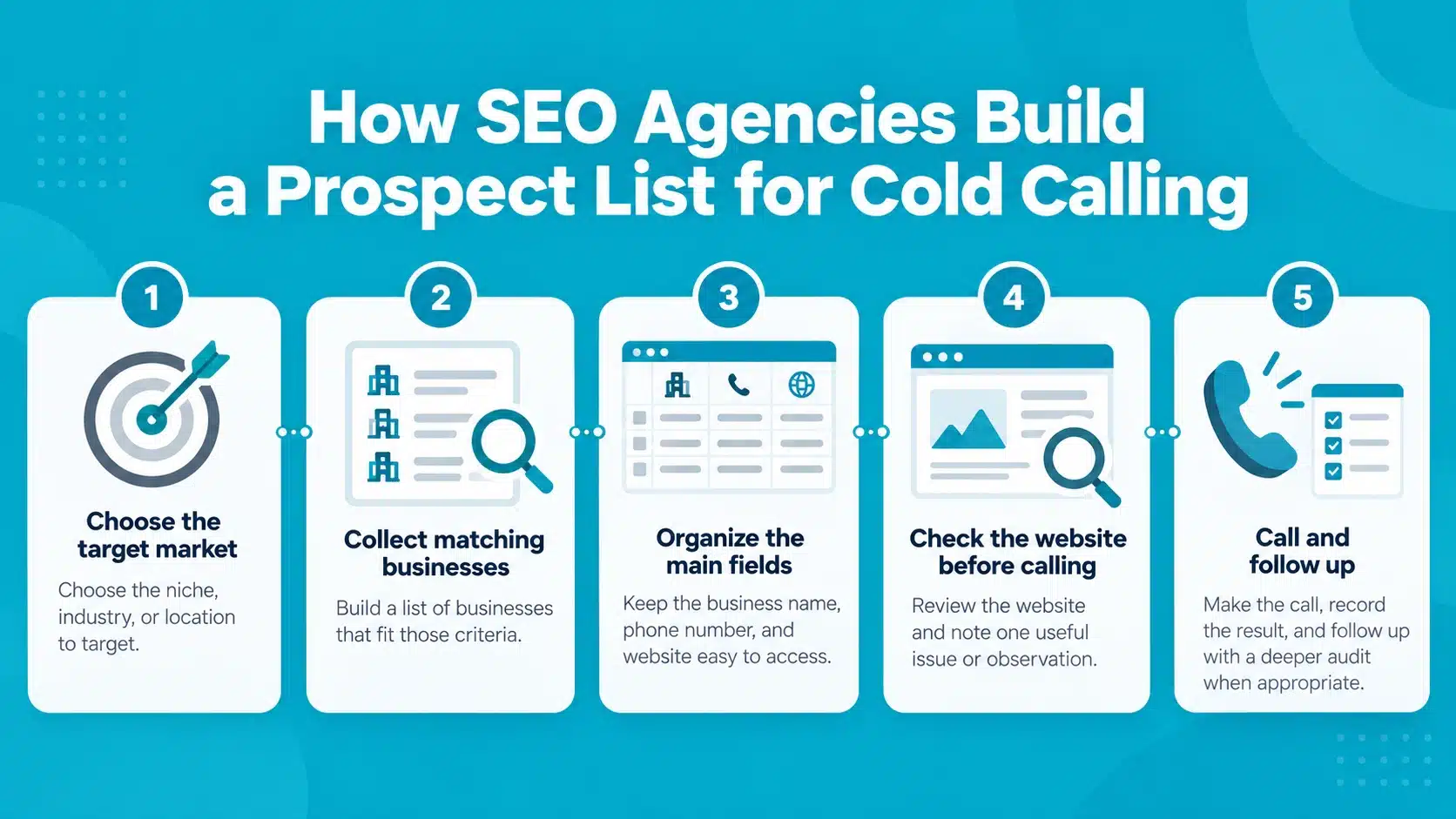
The workflow follows a simple order: choose the market, build the list, check the business, make the call, and follow up when there is a reason to continue. The sections below look at each stage and how an SEO agency can keep the research manageable.
Quick Answer: How to Build a Prospect List for Cold Calling:
- Choose the niche, industry, or location you want to target.
- Collect businesses that match those criteria.
- Organize the business name, phone number, and website for quick access.
- Check each website shortly before calling and note one relevant issue.
- Make the call, record the result, and follow up with a deeper audit when appropriate.
Start With a Narrow Niche or Location
A prospect list gets harder to use when the target is too broad. Before collecting businesses, decide what type of company you want to call and where those companies should be located.
In his interview with Edward Sturm, Blair Witkowski describes creating lists around a niche, industry, or location. That decision comes before the website check or the call because it determines which businesses enter the list in the first place.
Decide Which Businesses Belong on the List
Start with criteria that connect directly to the service you are selling.
An SEO agency might narrow its search by:
- business category or industry
- city, state, or service area
- type of SEO service being offered
- whether the business serves a local market
- other visible criteria relevant to the campaign
For example, an agency selling local SEO services to dental practices in one state has a clearer starting point than an agency collecting every type of small business across the country.
The criteria do not need to predict which companies will buy. They only need to define which businesses are relevant enough to research further.
For the broader process of finding, checking, and preparing business leads before outreach, see our guide to B2B prospecting.
Keep the List Focused Enough to Research
A larger list also creates more work after collection. Someone still has to open websites, check businesses, make calls, and record what happened.
A narrower list makes that work easier to manage.
Instead of starting with thousands of loosely related companies, an agency can work through a smaller group that shares the same location, industry, or business type. That makes it easier to notice recurring website problems and prepare for calls without spending too much time deciding whether each company belongs in the campaign.
Once those targeting rules are clear, the next step is to collect the business records and arrange them for calling.
Build and Organize the Prospect List for Cold Calling
Once the target market is clear, collect the businesses that match it and arrange the records for quick use during calls.
Blair Witkowski said that once the target market is clear. He turns it into a working call list.
Around 6:05–6:20 in the interview, he explains that he creates lists by niche, industry, or location:
“What I do is I will scrape and create a list, either by niche, industry, location, something like that.”
He then mentions Outscraper and Apollo among the tools he uses to collect the businesses before putting the records into a spreadsheet.
For more agency-specific examples, see how agencies use Outscraper to find clients.
Collect the Business Records You Need
Blair keeps the main calling fields simple. In the same part of the interview, he says he arranges the spreadsheet in this order:
- name
- phone number
- website
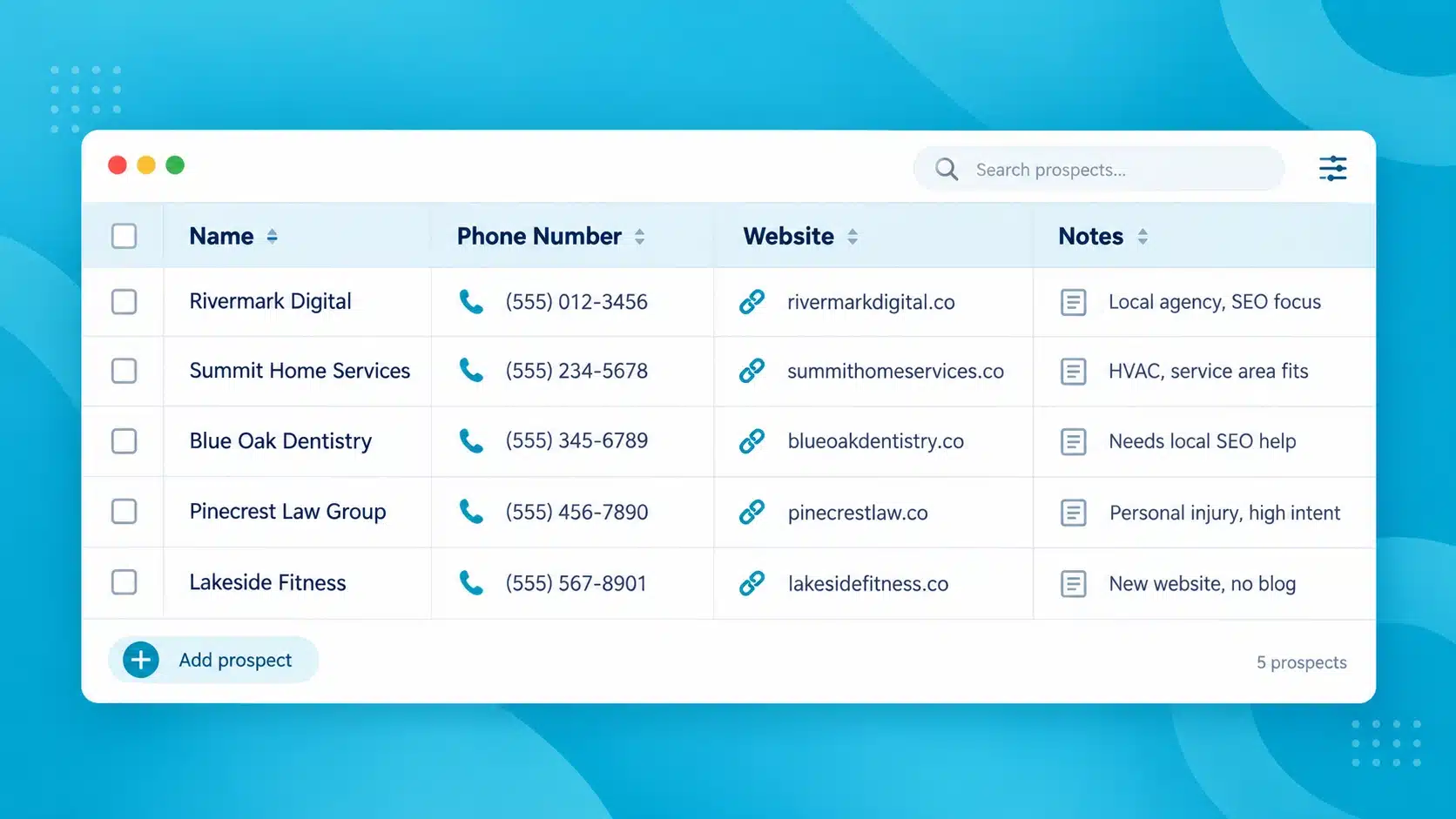
He explains that he prefers this order because he wants to “get right to it.”
For an SEO agency, that gives the caller the three details needed for the next step: identify the business, make the call, and open the website for a quick check.
Other fields such as category or location can still be useful when they help confirm that the business fits the campaign.
If you still need to create the source list, our guide to scraping leads without coding covers the collection step in more detail.
Keep the Main Call Fields Easy to Access
Blair mentions Outscraper again around 1:05:00, when Edward asks where he gets lists of potential clients.
He says:
“Outscraper is what I use…”
He also mentions ColdLytics, Apollo, and Claude in the same answer.
The two references make Blair’s use of Outscraper clear: he uses it as one of the tools for creating prospect lists, then works from those records during outbound calling.
From there, the next step is to check the prospect’s website before making the call.
Need the Business List First?
Use Outscraper to collect the business records you need before organizing them for calls.
Try Google Maps Scraper for FreeCheck the Website Before You Call
Once the prospect list is organized, Blair checks a business’s website shortly before making the call. The purpose is to find enough context for the conversation without turning every prospect into a full SEO audit.
Look for One Useful Observation
A quick website check can reveal something worth asking about or discussing. Depending on the service being sold, an SEO agency may notice an outdated page, unclear location information, or another visible issue connected to the business’s search presence.
The observation does not prove the company needs SEO. It simply gives the caller something specific to research and discuss.
For an SEO agency, that quick check may include whether the business has clear service and location pages, whether important pages appear outdated, or whether there is an obvious local-search issue worth discussing.
Keep Pre-Call Research Short
Spending too long on every prospect makes a cold calling list difficult to work through.
Blair’s approach separates the quick pre-call check from the deeper audit. Before the call, gather enough context to understand the business and start a relevant conversation. More detailed research can wait until the prospect shows interest.
Pre-Call Prospecting Workflow
Start with businesses that match the target niche and location.
Review the website and note one useful point before calling.
Use that context to make the conversation more specific.
How SEO Agencies Use Prospect Research Before the Call
The website check gives the caller a specific reason to start the conversation.
Instead of opening with a generic pitch, Blair’s process uses something noticed during the quick review of the business. That could be a website issue, weak location information, or another visible problem connected to the service being offered.
Start With Something You Observed
specific observation makes the call easier to connect to the business.
For an SEO agency, the caller might mention:
- an outdated page
- unclear service-area information
- weak local-search signals
- a website issue worth checking further
The point is to give the prospect a clear reason for the call without doing a full audit first.
Treat Business Signals as Research Clues
A visible issue can help an agency decide what to ask about, but it does not mean the business is ready to buy SEO.
The caller still needs to learn whether the problem matters to the prospect and whether there is a reason to continue the conversation.
If there is interest, that is when Blair’s workflow moves to the next step: a more detailed personalized audit.
Follow Up With Interested Prospects
If the call goes well, Blair moves the prospect into a more detailed follow-up rather than trying to cover everything during the first conversation.
Move From a Quick Check to a Personalized Audit
Blair uses a personalized Loom audit as the next step for prospects who show interest. This gives him room to look more closely at the website and explain the issues in more detail.
The deeper research happens after the first conversation, which keeps the initial prospecting process from becoming too time-consuming.
Track the Result and Next Action
After the call, record what happened and what needs to happen next.
A simple status can show whether the prospect:
- needs a follow-up
- agreed to receive an audit
- is not a fit
- should be contacted again later
Keeping those notes with the prospect list helps the agency move from research to outreach without losing track of interested businesses.
Watch the Full Interview
Blair Witkowski explains his prospect-list building, website checks, cold calling, and follow-up process in this interview with Edward Sturm.
Final Checklist: Before You Start Cold Calling
Before working through your prospect list, check that you have:
- Chosen a clear niche, industry, or location.
- Collected businesses that match those criteria.
- Kept the business name, phone number, and website easy to access.
- Checked the prospect’s website for one useful point before calling.
- Avoided spending time on a full audit before the first conversation.
- Recorded the result of each call and the next action.
- Saved deeper research or a personalized audit for prospects who show interest.
FAQ
At minimum, keep the business name, phone number, and website easy to access. Category, location, notes, and call status can be added when they help the caller confirm fit or track follow-up.
Check enough to understand what the business does and find one relevant issue worth discussing. This may include the website, service or location pages, and visible local-search problems. Save a deeper audit for prospects who show interest.
No. A full audit for every name on the list can slow the calling process down. A quick website check is usually enough for the first conversation, while a more detailed audit can follow when the prospect wants to continue.