Table of Contents
B2B prospecting gets harder after you find the businesses.
A search for “dentists in Chicago” can give you plenty of company names, but that still leaves several questions unanswered. Which clinics are active? Which ones match the type of account you want? Which websites are current? Which businesses have enough useful information to justify more research? And once the company looks relevant, who inside it should you actually contact?
Good prospecting is the work of narrowing that first list, checking the company behind each record, researching the people connected to the account, and deciding which businesses are worth moving into outreach.
A smaller list with clear reasons behind each company is usually more useful than a large file filled with businesses nobody has checked yet.
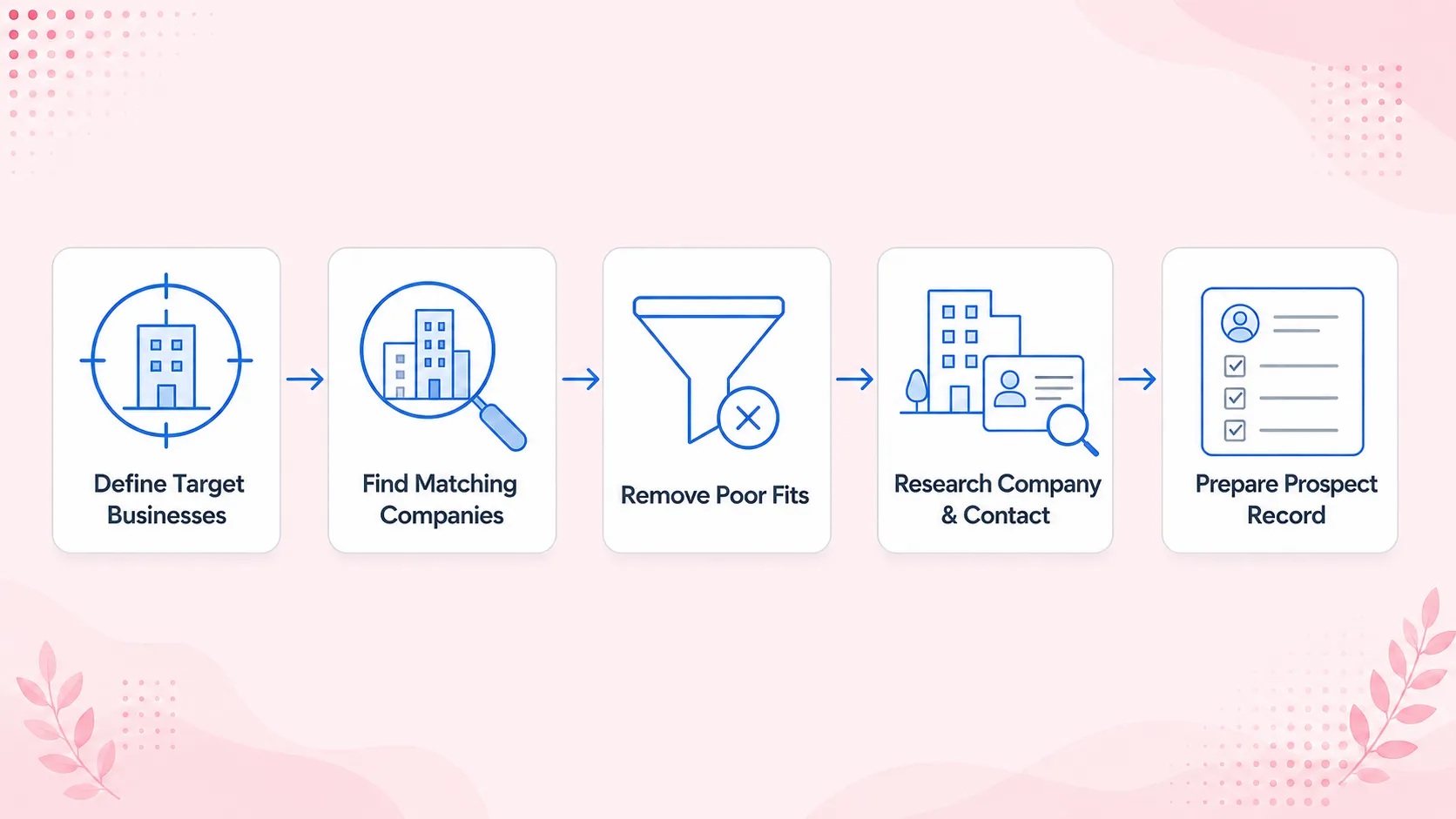
Quick Answer: How Does B2B Prospecting Work?
- Define your target businesses.
- Find companies that match your criteria.
- Remove poor fits.
- Research the company and the right contact.
- Prepare the prospect record for outreach.
What Is B2B Prospecting?
B2B prospecting is the process of finding businesses that match your target market, checking whether they are worth further research, and identifying the people most relevant to your offer.
It is more specific than simply collecting leads. A business may appear in a directory, search result, or database and still be a poor fit for the campaign. Prospecting adds the research step between finding the company and deciding whether it should move into outreach.
If you need the broader process around attracting and finding potential customers, our guide to B2B lead generation covers that wider topic.
Why Finding a Company Is Only the First Step
A company name tells you very little on its own.
Before adding a business to an outreach list, you may still need to check whether it is active, whether it fits the target market, whether its website and public information are current, and whether you can identify the right person to contact.
The research done at this stage helps reduce time spent on businesses that looked relevant at first but do not hold up once you check the details.
Start B2B Prospecting by Defining the Businesses You Want
A prospect list is easier to review when the entry criteria are clear before the search begins.
Start with the business traits that are required for the campaign. These may include industry, location, company type, or other conditions that make a company relevant to what you are offering.
A local SEO agency, for example, may care about business category and location first. A lead-generation agency working from a client brief may need a different set of filters. The criteria should reflect the campaign, not a generic idea of what a “good lead” looks like.
Choose the Business Criteria That Matter
Separate the details into two groups.
Required criteria decide whether a company belongs on the list at all.
Examples include:
- industry or business category
- city, state, or region
- company type
- other campaign-specific requirements.
Useful signals help decide whether the company deserves more research.
Depending on the campaign, these may include website presence, business status, ratings, review activity, or available contact information.
The distinction matters because a signal is not proof that a company wants to buy. A missing website or a low rating may make a business worth checking, but it does not confirm purchase intent.
Avoid Starting With a List That Is Too Broad
A large list can create more work if most of the records still need to be ruled out manually.
If the campaign is meant for a specific type of business, narrow the search as early as possible. That can mean limiting the geography, choosing a tighter category, or setting a small number of required conditions before collecting records.
The first list does not need to be perfect. It only needs to be focused enough that the next research step is worth the time.
How to Find Businesses for B2B Prospecting
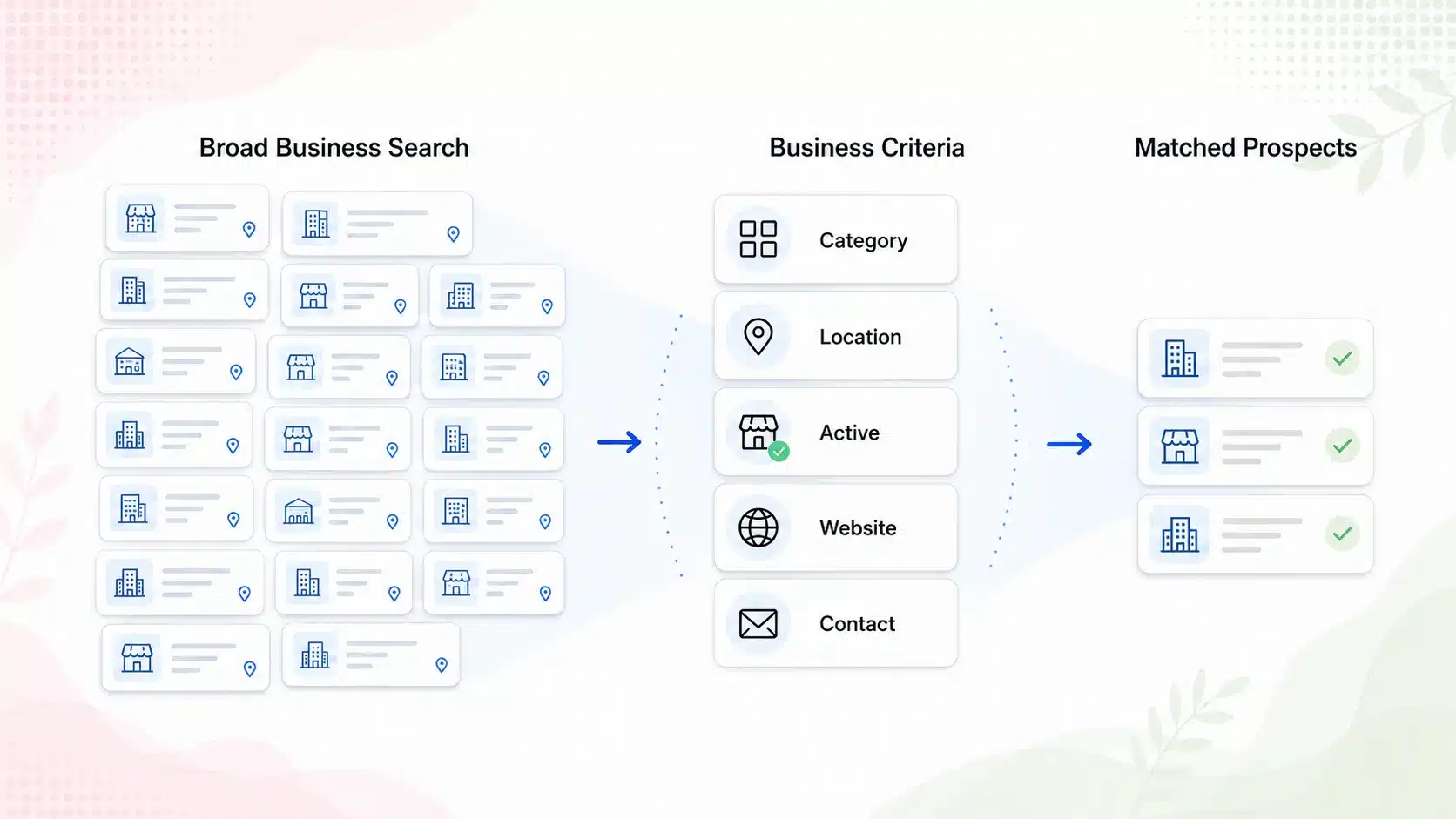
Once the business criteria are clear, the next step is finding companies that match them.
The right source depends on what you are trying to find. A local campaign may start with Google Maps or business directories. A broader B2B search may use company websites, professional networks, industry lists, or existing databases.
What matters is that the source gives you enough information to decide whether a business belongs in the next stage of research.
Start With the Sources Where Your Target Businesses Appear
Common sources include:
- search engines
- Google Maps and local listings
- business directories
- company websites
- professional networks
- industry associations
- existing business databases.
For local prospecting, Google Maps scraping for lead generation can help collect business records before you start checking companies individually.
Using more than one source can also help when a company record is incomplete or outdated.
Collect Enough Business Information to Review the List
A company name alone is not enough for useful prospect research.
Depending on the campaign, you may want to collect:
- business name
- category
- location
- website
- business status
- public contact details
- other information tied to the campaign criteria
This first pass should give you enough context to remove poor fits before spending more time on deeper research.
When Manual Collection Stops Being Practical
Manual searching works when the list is small.
It becomes repetitive when the same process has to be repeated across many businesses, categories, or locations. At that point, a data-collection tool can reduce the amount of copying and searching needed before the review stage.
For local business research, Outscraper can fit at this point in the workflow when the task involves collecting supported business data from Google Maps at scale. The collected records still need to be reviewed against the campaign criteria before they move further into prospect research.
How to Research a B2B Prospect Before Outreach
Finding a company that matches your target criteria does not mean the research is finished.
Before moving the record into outreach, check whether the business still fits the campaign and whether the available information supports spending more time on it.
Check Whether the Company Still Fits Your Target
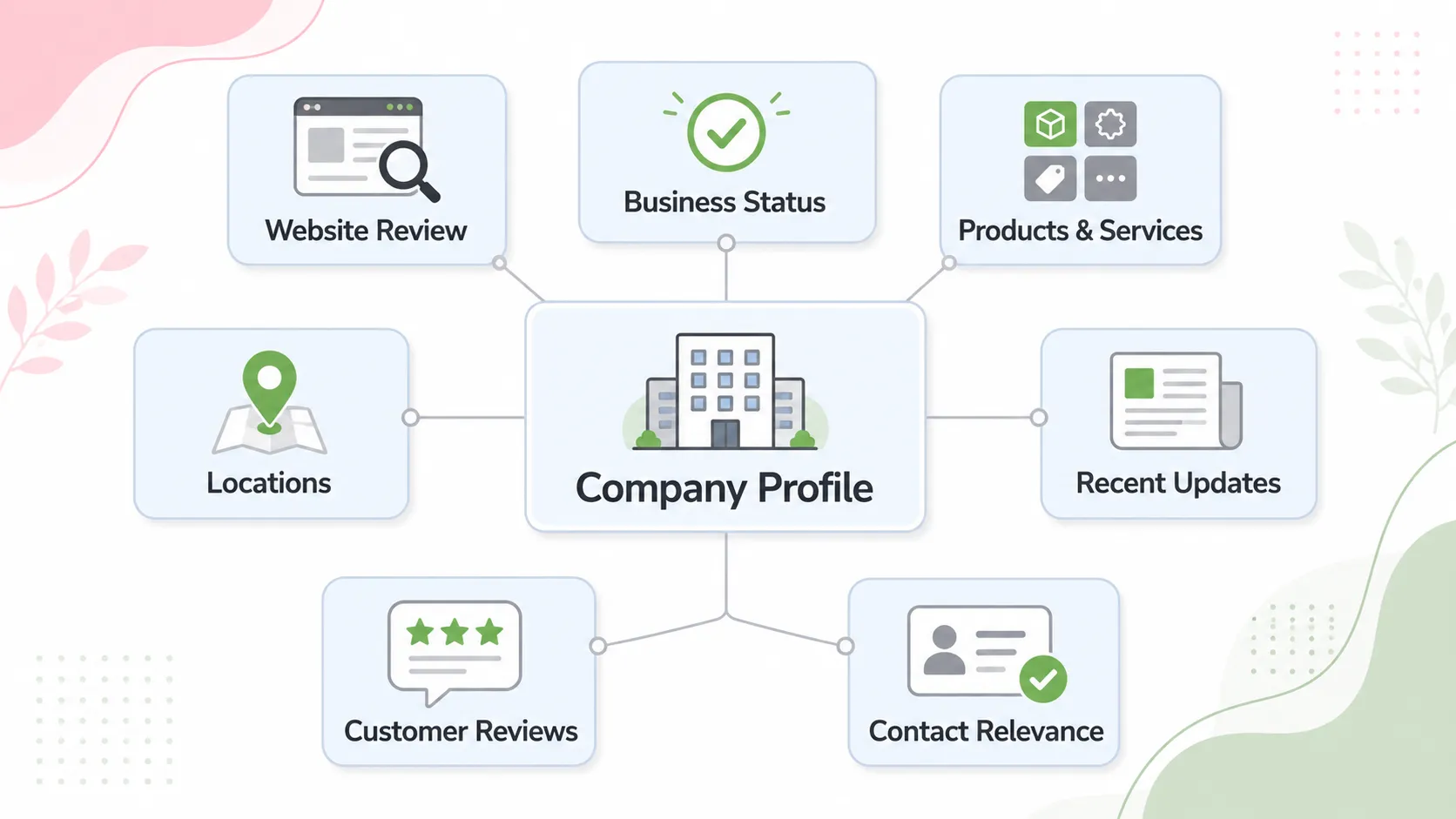
First, start with the basics by checking whether the company is still active and still operates in the market you are targeting, and whether the website or public business information matches the record you found.
Followed by the following details to examine closely:
- current products or services
- business locations
- company size or structure, when relevant
- website activity
- recent public updates
- whether the company still matches the original campaign criteria
This step helps catch records that looked relevant during the first search but no longer fit once you check them more closely.
Look for Business Context, Not Just Contact Details
A company name, email address, and phone number tell you how to reach a business. They do not explain whether the business is worth contacting.
Useful research can include what the company sells, who it serves, where it operates, how active its website appears, and whether there have been recent changes that matter to your campaign.
The amount of research should match the value of the account. A small local prospect may only need a short review, while a larger account may justify more time.
Use Public Signals as Research Prompts
Public information can give you reasons to investigate a company more closely.
Examples may include:
- new locations
- hiring activity
- leadership changes
- website changes
- recent reviews
- new services or products
- public announcements
These signals should not be treated as proof that the business is ready to buy. They are simply clues that can help decide what to check next.
Decide Whether the Business Deserves Further Research
After reviewing the company, place it into a simple next-step group:
- Good fit: The business still matches the campaign and is worth researching further.
- Needs more checking: The company may fit, but important information is still missing.
- Poor fit: The business no longer matches the criteria or does not justify more research.
This keeps the prospect list from growing simply because a company appeared in the original search.
Find the Right Person and Prepare the Prospect Record
Once the company still looks relevant, the next step is finding the person most closely connected to the problem your offer addresses.
A useful prospect record should connect the company, the contact, and the reason the account is still worth considering.
Identify the Person Connected to the Problem You Solve
Start with the role rather than searching for any available contact.
For example, a marketing-related service may require someone in marketing or growth, while another offer may be more relevant to operations, sales, finance, or the business owner.
Check:
- job title
- department
- seniority
- role responsibilities
- whether the person is still with the company
For smaller businesses, the owner or manager may be the most relevant contact. Larger companies may require more research because several people can be involved in the same decision.
If identifying the right role is the difficult part, see our guide on how to find decision makers before adding contacts to your prospect list.
Check Contact Information Before Using It
Contact information can become outdated, so it should be reviewed before it moves into an outreach list.
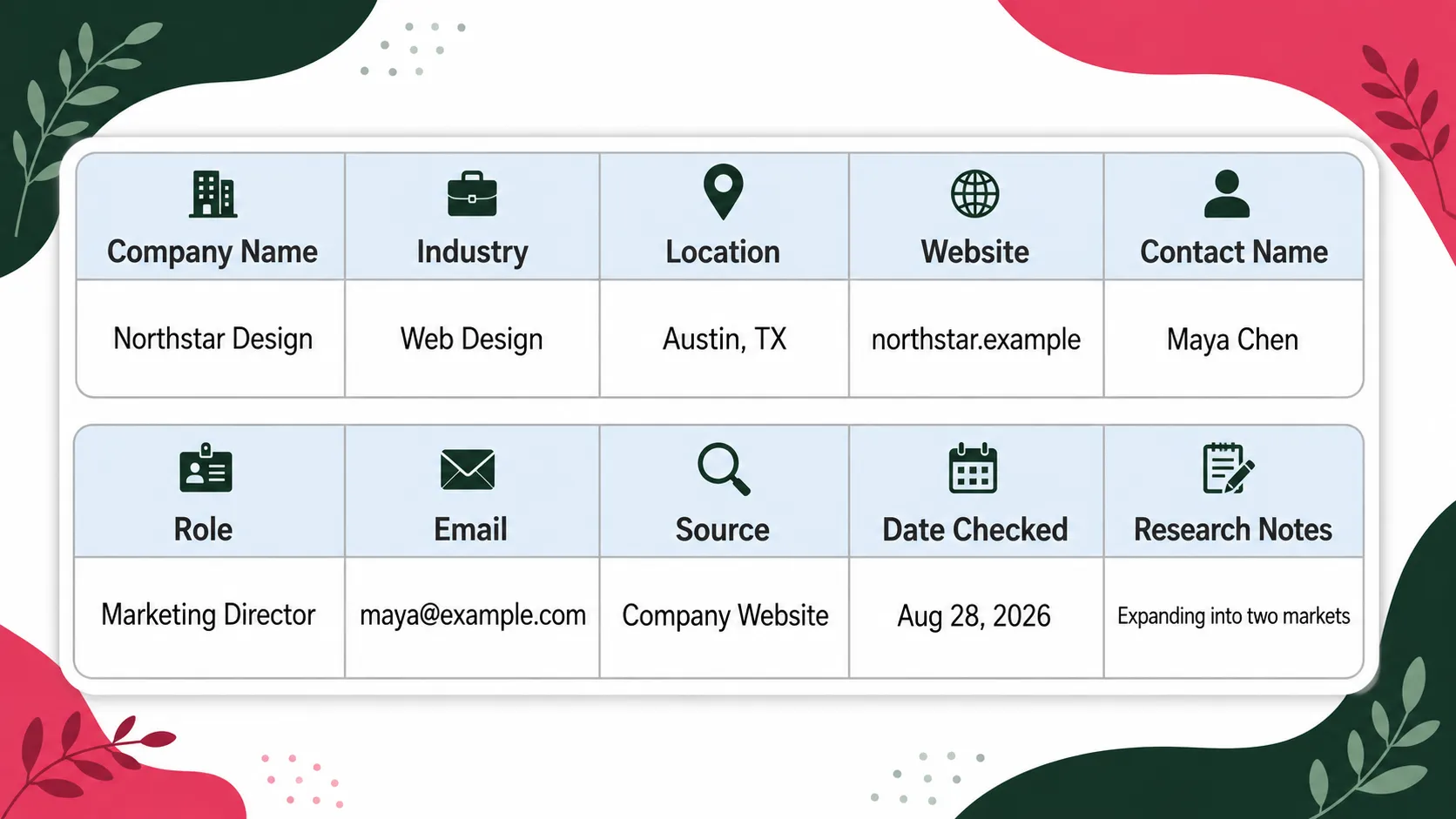
Depending on the campaign, a prospect record may include:
- company name
- contact name
- job title
- business email
- phone number
- website
- source
- date checked
Finding a contact does not automatically make the record usable. The person still needs to match the role you are trying to reach.
When email discovery is part of the research process, email scraping for B2B lead generation is one way to collect publicly available contact data before checking whether it belongs in the final list.
Keep Research Notes Tied to What You Can Confirm
Short notes make it easier to remember why a company stayed on the list.
Useful notes can include:
- why the company matches the campaign
- what information was checked
- which person appears relevant
- where the information came from
- what still needs more research
- when the record was last reviewed
Avoid turning assumptions into facts. If a company has a low rating, a new location, or a recent hiring post, record the signal you observed rather than assuming what the business needs.
This gives the next person working on the list enough context to understand why the prospect is there and what should be checked before outreach.
B2B Prospecting Checklist Before Outreach
Before moving a prospect into outreach, check that you have:
- Defined the type of business you want to reach.
- Chosen the required company criteria.
- Found businesses that match those criteria.
- Removed records that clearly do not fit.
- Checked whether the company is still active and relevant.
- Reviewed useful company information and public signals.
- Identified the person most relevant to the offer.
- Checked the available contact information.
- Added short research notes and sources.
- Recorded when the prospect information was last reviewed.
FAQ
B2B prospecting is the process of finding companies that match your target market, researching those businesses, identifying the right contacts, and deciding which prospects are worth moving into outreach.
Lead generation is the broader process of creating or identifying possible business opportunities. B2B prospecting focuses more narrowly on selecting specific companies and contacts, checking their fit, and preparing them for outreach.
Start by checking whether the company still matches your target criteria. Review its website, business information, recent public activity, and other relevant signals. Then identify the person most closely connected to the problem your offer addresses and check the available contact information.
A useful prospect record may include the company name, category, location, website, relevant contact, job title, email or phone when available, research notes, source, and the date the record was last checked.